
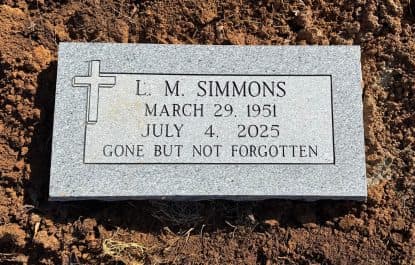
Families often choose between flat and upright bronze memorials by looking at pictures and thinking about how the memorial will look at the grave. What is easy to overlook is everything underneath and behind the finished product. A bronze memorial is more than a plaque. It is a combination of metal, stone, and a foundation that has to hold up to rain, mowing, shifting soil, and decades of weather. The way that system is built differs between a flat bronze marker and an upright one, and understanding those differences can help you ask better questions before you order.
Why the Mechanics Matter as Much as the Look
If you are weighing the choice mainly by appearance and by what your family prefers, our guide on flat markers vs. upright headstones and family wishes is a good place to begin. This article covers a different question: how each style is physically built, mounted, and supported. A memorial that looks beautiful on day one but sits on poor preparation can settle, tilt, or loosen over time, so the engineering beneath the surface is worth understanding.
What Is Actually in a Bronze Memorial
Bronze is rarely used alone. The bronze plaque, with its raised lettering and decorative detail, is typically paired with a base that gives it support. As our page on bronze headstones and grave markers explains, the bronze plaque is securely mounted to a granite base, creating a durable and visually striking memorial. In some settings, a flat bronze marker may be paired with a granite or concrete base. In every case, the plaque, the base, and the foundation work together as a single system.
Weight: Lighter Plaque, Heavier Base
A bronze plaque on its own can be relatively thin compared with the stone around it. It is the granite base, and in the case of an upright memorial the granite structure, that adds the most weight. A flat marker sits low and is generally lighter and more compact. An upright bronze memorial usually involves a taller granite form, which means more mass to move, lift, and set. The exact weight depends on the size, thickness, and design of your memorial, so it is best to ask about it directly when you plan your order.
Why Weight Changes the Installation
More weight means a different approach on installation day. Larger upright memorials generally call for more equipment, more planning for access to the grave site, and more care in setting. Cemetery roads, soft ground, and tight spacing between plots can all complicate this. A flat marker is easier to handle, but it still has to be placed with precision so that it sits flush and level with the ground.
Mounting a Flat Bronze Marker
A flat bronze marker is designed to sit flush with the ground. As our page on flat grave markers notes, these markers are commonly required by cemeteries that prefer lawn-level memorials. Because the marker is at ground level, its base needs to be positioned so that the surface lines up with the surrounding turf and with neighboring markers. The plaque is fastened to its base so that it does not shift, and the finished marker has to be level so that water drains properly instead of pooling on the surface.
Mounting an Upright Bronze Memorial
An upright bronze memorial typically rises above the ground on a granite structure, with the bronze plaque secured to it. Here the mounting has to account for height and the effect of wind, weather, and ground movement. The plaque has to stay fixed to the granite, and the granite has to stay stable on its foundation. Our page on upright headstones and cemetery monuments describes the traditional above-ground option, though not every cemetery permits it, which is one more reason to confirm the rules before you commit.
Foundation Differences
The foundation is where flat and upright memorials differ most. A flat marker, because it is low and spreads its weight over a wider area, generally needs a base that keeps it flush and level. An upright memorial is taller and concentrates its weight, so its foundation generally has to be sized and prepared to keep it from leaning or settling. Soil type, drainage, and the depth and size of the foundation all matter. As our monument installation page explains, cemetery monuments require precise preparation, proper foundations, and careful placement.
Ground Conditions and Louisiana Weather
Northwest Louisiana’s heat, heavy rain, and soft soils can test any memorial. Water that collects around a base can wash out soil and cause settling over time, and repeated wet and dry cycles can shift the ground. A foundation that suits one location may not be right for another. That is one reason local experience matters, and why preparation should be tailored to the specific cemetery and plot instead of being treated as one-size-fits-all.
What Cemeteries Require
Cemeteries often set their own rules for size, thickness, and mounting. Our page on bronze headstones notes that bronze memorials must meet specific cemetery requirements regarding size, thickness, and mounting. Some cemeteries restrict upright memorials in certain sections, require flat markers for easier maintenance, or specify how a base must be set. For more detail, see our article on cemetery rules that affect marker placement.
How Each Style Ages
Both styles are durable, but they age in different ways. A flat bronze marker is closer to the ground and may collect dirt, grass clippings, and moisture, so it can benefit from periodic cleaning. An upright memorial is more exposed to sun and wind, and its foundation has to keep it steady over time. Bronze develops a patina and may need professional care, which is discussed in our article on comparing granite and bronze markers. For existing memorials, our page on bronze marker cleaning and repair explains the options.
A Side-by-Side Look at the Practical Differences
- Weight: Flat markers are lower and more compact; upright memorials add more granite and generally more weight.
- Mounting: Flat markers are set flush and level with the ground; upright memorials secure a bronze plaque to a tall granite form.
- Foundation: Flat markers need a base that keeps the surface flush and level; upright memorials need a foundation prepared to keep taller, heavier stone stable.
- Installation: Flat markers are simpler to handle; upright memorials generally require more equipment and planning.
- Cemetery rules: Flat markers are commonly required; upright memorials are permitted only where regulations allow them.
Questions to Ask Before You Order
Before you finalize an order, ask whether the cemetery permits your chosen style, what size and thickness limits apply, how the plaque will be mounted, and what kind of foundation will be used. Ask who will handle the installation and how placement will be coordinated with the cemetery. Our article with key questions before scheduling monument installation offers a helpful checklist, and our frequently asked questions page answers common questions about timing and cemetery requirements.
Why We Install Only What We Make
We install only the memorials we design and create. This lets us stand behind the quality of the materials, craftsmanship, and installation of every monument we place, and it means the people who built your memorial are the ones who prepare it for placement. Learn more about our monument installation services and our on-site cemetery services.
Serving Shreveport, Bossier City, and Nearby Communities
Magnolia Trail Memorials is a fourth-generation, family-owned monument company serving Shreveport, Bossier City, Benton, Haughton, and the surrounding area. You can find local details on our pages for headstones and cemetery monuments in Shreveport and headstones and cemetery monuments in Bossier City.
Planning a Bronze Memorial?
If you are deciding between a flat and an upright bronze memorial, we are happy to walk you through the options, the cemetery’s requirements, and what each style involves behind the scenes. Browse our bronze headstones and grave markers, then schedule a free memorial consultation with our team.